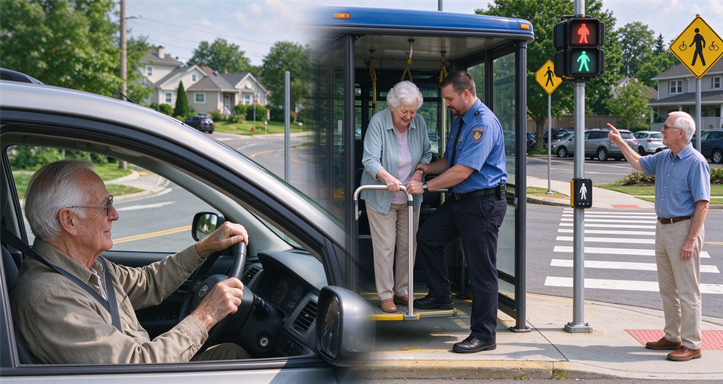
Traffic safety for the elderly: How to reduce risks when driving, taking public transportation, or walking?
Growing older doesn't mean giving up the steering wheel, transit card, or daily walks. However, it's undeniable that our vision, reaction speed, muscle strength, and balance subtly change with age. These changes directly impact every outing—whether it's driving, taking public transport, or walking to the corner store.According to data from the U.S. CDC, approximately 7,000 people aged 65 and older are injured in traffic accidents every day, with over 600 requiring hospitalization. More alarmingly, in fatal pedestrian accidents, the mortality rate for people over 65 is two to three times that of younger adults. These figures are not meant to scare anyone, but rather to remind us that traffic safety is a health issue that older adults need to proactively manage.This article won't advise you to "stop driving" or "stay home." Instead, I'll explore three scenarios—driving, taking public transportation, and walking—to show you how to maintain independent travel while minimizing risks. We'll discuss eye exams, route planning, safety equipment, and the impact of these adjustments on your mental well-being and quality of life.